.svg)

Triple-Point-of-Water Cell
The Triple-Point-of-Water (TPW) Cell consists of a cylinder of borosilicate glass with a reentrant tube serving as a thermometer well, filled with high-purity, gas-free water, and sealed. When an ice mantle is frozen around the well, and a thin layer of this ice mantle is melted next to the well, the triple point of water temperature can be measured in the well. The three states of water in equilibrium can only occur at the assigned value on the International Temperature Scales of 0.01 degrees C (273.16 K). (Figures 1 and 2)
Gallium Melt Cell
The gallium melt cell is a closed-end Teflon tube with a Teflon-tube reentrant well, aluminum shell, and Teflon jacket, filled with high-purity gallium metal. The frozen cell is heated above the gallium melt point (GaMP) temperature, establishing the gallium melt plateau, and allowed to melt over a period of 8 to 12 hours, achieving the assigned gallium melt temperature of 29.7646 degrees C. (Figure 3)
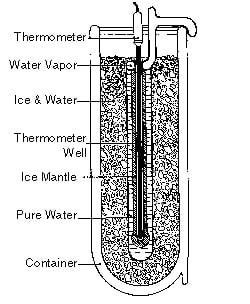
Figure 1: Triple-Point-of-Water Cell
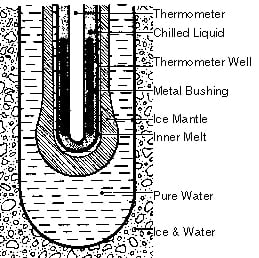
Figure 2: Cross Section of Triple-Point-of-Water Cell
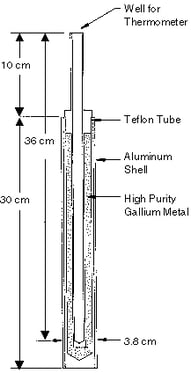
Figure 3: Gallium Cell
Measurement Uncertainties
Uncertainties in the achievement of high-accuracy temperature measurements for a Laboratory Standard Platinum Resistance Thermometer (SPRT) in the normal oceanographic temperature range include:
- Accuracy of the measurement system at the fixed points
The NIST uncertainty budget was used to evaluate Sea-Bird measurements at the fixed points of GaMP and WTP. Included in the evaluation is over three years of data measurements at Sea-Bird in the fixed point cells. State-of-the-art SPRT, automatic balancing bridge, and external standard resistor reference were used to make the measurements. The uncertainty budget tables provide the summary results. (Figures 4, 5, 6, and 7; Tables 1 and 2) - Accuracy of the measurement system between the fixed points
Evaluation of the performance of the measurement system between the GaMP and WTP fixed points is not possible, but inferring from other subrange inconsistency evaluations and the narrowness of this range, the uncertainty would be very small.
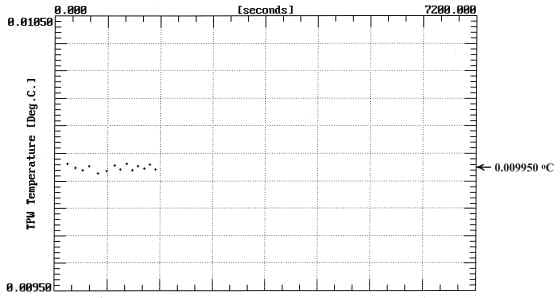
Figure 4: Triple Point of Water Measurements — YSI SPRT S/N 4747
in Jarrett TPW Cell S/N 1866, 02 January 1998
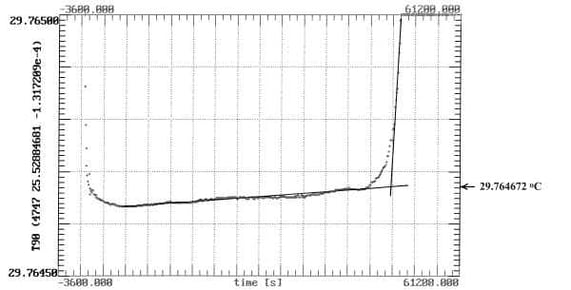
Figure 5: Gallium Melts — YSI SPRT S/N 4747
in Isotech GaMP Cell S/N 114, 01 May 1996
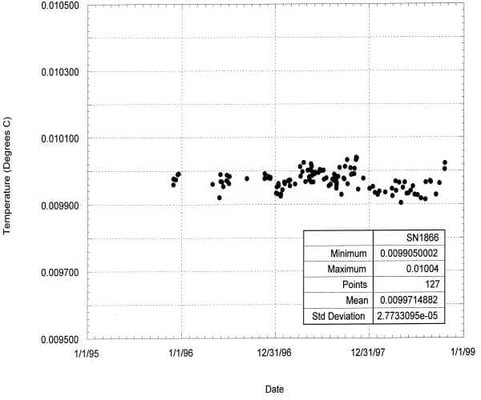
Figure 6: Triple Point of Water Temperature — YSI SPRT S/N 4747
in Jarrett TPW Cell S/N 1866, 20 October 1998
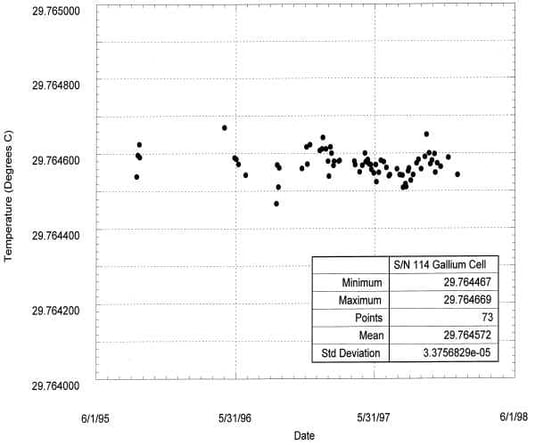
Figure 7: Gallium MeltsTemperature — YSI SPRT S/N 4747
in Isotech GaMP Cell S/N 114, 03 January 1996
Table 1: GaMP Uncertainty Budget (Isotech GaMP Cell S/N 114)
| Type A | Bridge measurement (0.2 ppm) | 0.0000005 |
| Repeatability of bridge readings | 0.000026 | |
| Non-linearity | 0.000000 | |
| Quadrature effects in ac measurement | ~0.000000 | |
| Total A | 0.000027 (assumes ~0 non-linearity) | |
| Type B | Chemical impurities (6N purity) | 0.000137 |
| Hydrostatic-head (~ -270 microK) | ~0.000010 (at end point) | |
| Propagated TPW | 0.000031 | |
| SPRT self-heating (-420 microK) | 0.000010 | |
| Immersion | ~0.000000 | |
| Moisture (dry ice test) | ||
| Gas pressure | 0.000000 (at GaMP assumed) | |
| Insulation degradation (mostly high temperature problem) | 0.000000 | |
| Total B | 0.000188 | |
| Total Standard Uncertainty | 0.000190 | |
| Total Expanded Uncertainty (k=2) | 0.000380 | |
Table 2: TPW Uncertainty Budget (Jarrett TPW Cells S/N 1682, 1866, etc.)
| Type A | Bridge measurement (0.2 ppm) | 0.0000005 |
| Repeatability of bridge readings | 0.000026 | |
| Non-linearity | 0.000000 | |
| Quadrature effects in ac measurement | ~0.000000 | |
| Total A | 0.000027 (assumes ~0 non-linearity) | |
| Type B | Chemical impurities (Jarrett aged glass) | 0.000001 (bubble < 4mm diameter) |
| Hydrostatic-head (-198 microK) | 0.000010 | |
| SPRT self-heating (-360 microK) | 0.000005 | |
| Immersion | 0.000000 | |
| Moisture (dry ice test) | 0.000000 | |
| Gas pressure | 0.000000 | |
| Insulation degradation (mostly high temperature problem) | 0.000000 | |
| Total B | 0.000016 | |
| Total Standard Uncertainty | 0.000031 | |
| Total Expanded Uncertainty (k=2) | 0.000062 | |
SBE total calibration uncertainties also include:
- Uncertainties of applying SPRT defined temperatures to in-house standard
Analysis of the drift in Sea-Bird primary reference sensors against the SPRT indicates a variability of less than ±100 micro degrees C around the defined drift. (Figure 8) - Uncertainties of applying in-house standard defined temperatures to production sensors
Sea-Bird secondary reference sensors indicate a variability of ±100 micro degrees C. (Figure 9)
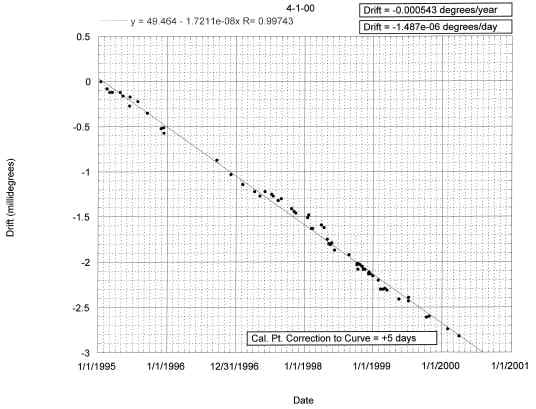
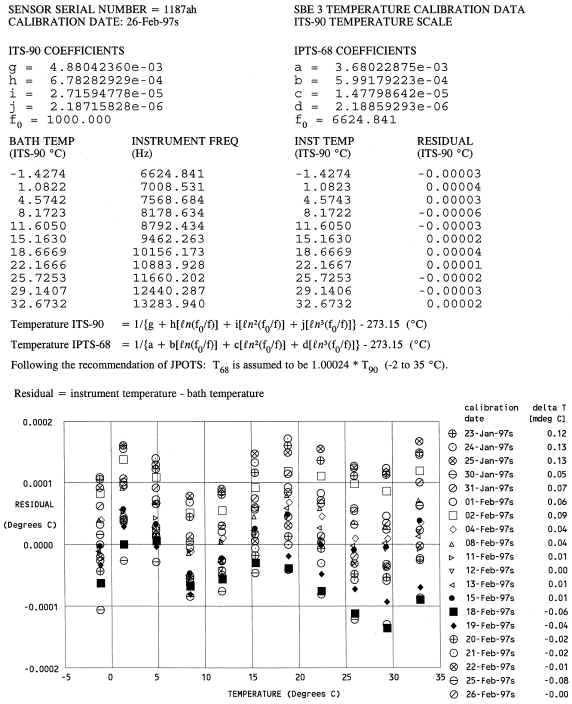
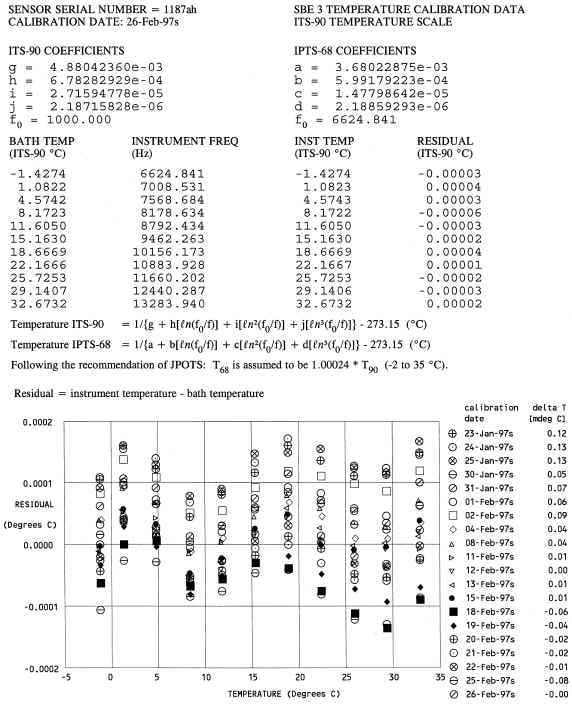
Figure 9: SBE 3 Variability
Adding the known uncertainties in the fixed points, the SPRT measurement system, and the transfer standards and technology yields a total known uncertainty of ±580 micro degrees C.
Repeatability of a typical Sea-Bird production sensor is shown. The sensors have typical drift rates of better than 0.001 degrees C in 3 months. (Figure 10)
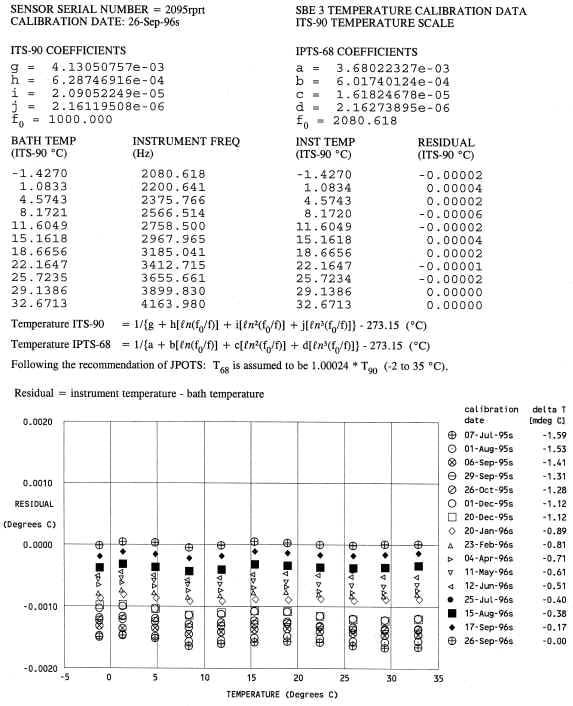
Figure 10: SBE 3 Repeatability
The table below compares features of the IMM to the Surface Inductive Modem (SIM) and OEM Underwater Inductive Modem:
Notes:
(1) The Underwater Inductive Modem is a component used by OEMs to integrate Sea-Bird's inductive modem technology with a third-party sensor.
(2) The SIM and UIM have a delay between adjacent bytes, resulting in only 100 bytes/sec transmission instead of 120 bytes/sec.
|
|
IMM |
SIM |
OEM UIM |
|---|---|---|---|
|
Deployment History (as of 2014) |
8 years |
16+ years |
14+ years |
|
Maximum Data |
1200 baud, |
1200 baud, |
1200 baud, |
|
Typical Power Consumption |
1 mA at 12V |
30 mA at 12V |
15 mA at 12V |
|
Physical Size |
32 mm x 70 mm |
100 mm x 150 mm |
Varies |
|
Additional Features |
|
|
|
|
Typical Applications |
|
|
|