.svg)

A New Paradigm for Ocean Color Satellite Calibration
The HyperNAV program is part of the NASA PACE (Plankton, Aerosol, Cloud, Ocean Ecosystem) Mission, set to launch in 2024. The NASA PACE Mission is an initiative aimed at helping scientists understand how carbon dioxide is exchanged between our oceans and the atmosphere. Not to mention, it also will serve to provide a better picture of how particles in the atmosphere can affect the growth of phytoplankton in our oceans. Through PACE, we will have more concrete clarity into our understanding of oceanic events such as harmful algal blooms (HABs). HABs such as the Red Tide can have harmful implications on human, fish, and plant health.
Learn more about the red tide from NOAA here.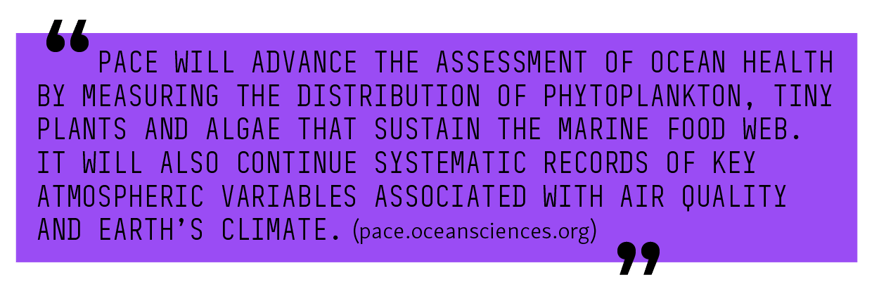
View ocean color images here in PACE's interactive map.
What is the HyperNAV Program, and how is Sea-Bird Scientific involved?
The HyperNAV Program is a segment of the NASA PACE Mission with goals to implement next-level hyperspectral radiometric sensors for calibration/validation. These sensors are integrated on autonomous floats as a means to minimize data uncertainty. Our HyperNAV dual hyperspectral radiometer is integrated on autonomous floats that drift in the ocean, and the radiance sensors will be used to calibrate data collected from PACE satellites. Due to the extremely precise nature of our instruments and the measurements they take, Sea-Bird Scientific radiometers were the best-in-class solution to validate NASA's data for this particular application.
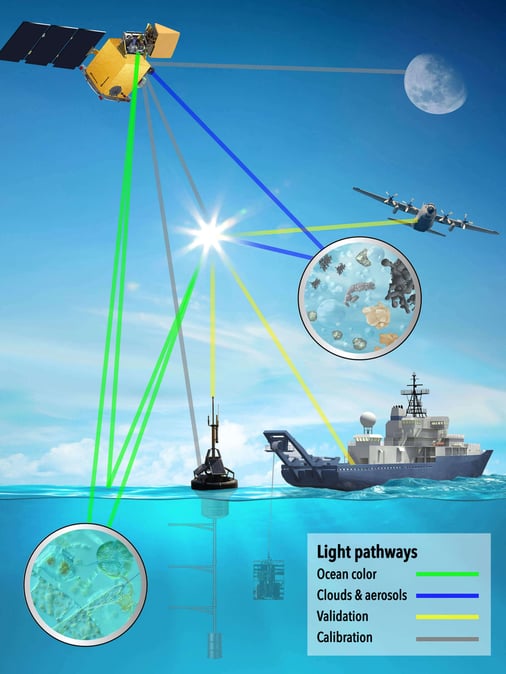
Image courtesy of pace.gsfc.nasa.gov
Why is the HyperNAV Program important during World Oceans Week?
Have you heard that the United Nations declared 2021 - 2030 the United Nations Decade of Ocean Science for Sustainable Development? The data gathered from the PACE Mission will help address key challenges coming directly from the UN Ocean Decade. The UN Ocean Decade declared seven outcomes that describe the ocean we want:
- A clean ocean where sources of pollution are identified and reduced or removed.
- A healthy and resilient ocean where marine ecosystems are understood, protected, restored and managed.
- A productive ocean supporting sustainable food supply and a sustainable ocean economy.
- A predicted ocean where society understands and can respond to changing ocean conditions.
- A safe ocean where life and livelihoods are protected from ocean-related hazards.
- An accessible ocean with open and equitable access to data, information and technology and innovation.
- An inspiring and engaging ocean where society understands and values the ocean in relation to human wellbeing and sustainable development.
We are excited to be part of the PACE mission, which supports these UN Ocean Decade outcomes.
Read more about how the PACE Mission supports the UN Ocean Decade here.
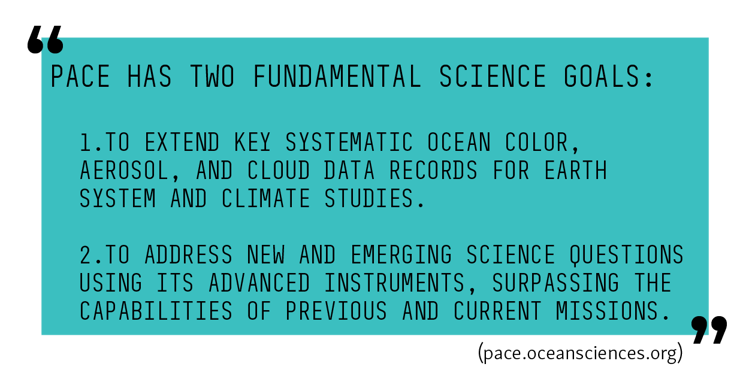
We are proud to work alongside NASA and the PACE Mission team to implement our calibration and data validation solutions. Through the data that are calibrated against our radiometers, NASA and the PACE teams can make accurate assessments about the exchange of carbon between the ocean and the atmosphere, enabling scientists to better understand the implications of climate change on our oceans.