Tech Tips

Q&A: Identifying Data Types

Posted on 04.28.2021

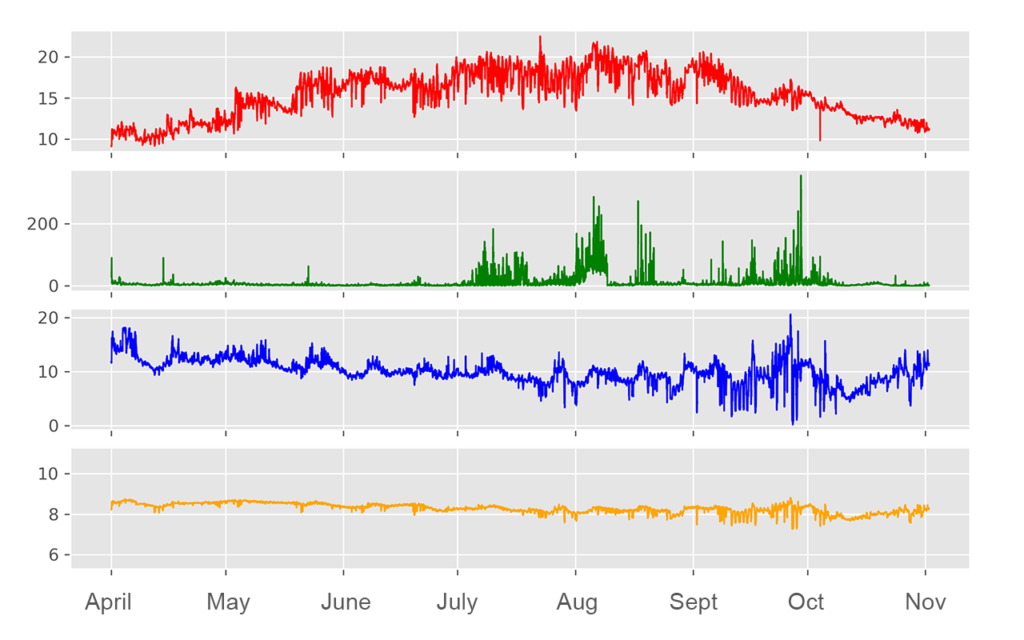
unlabled data from a HydroCAT-EP multiparameter probe

The data above came from a HydroCAT-EP multiparameter CTD in a shallow embayment from April - November. Can you correctly label the 4 plots shown above? The HydroCAT-EP measures the following parameters:

  • Temperature
  • Conductivity
  • Pressure
  • Dissolved oxygen
  • pH
  • Chlorophyll
  • Turbidity

Hint: this area is subject to periods of eutrophication during the late summer/early fall.
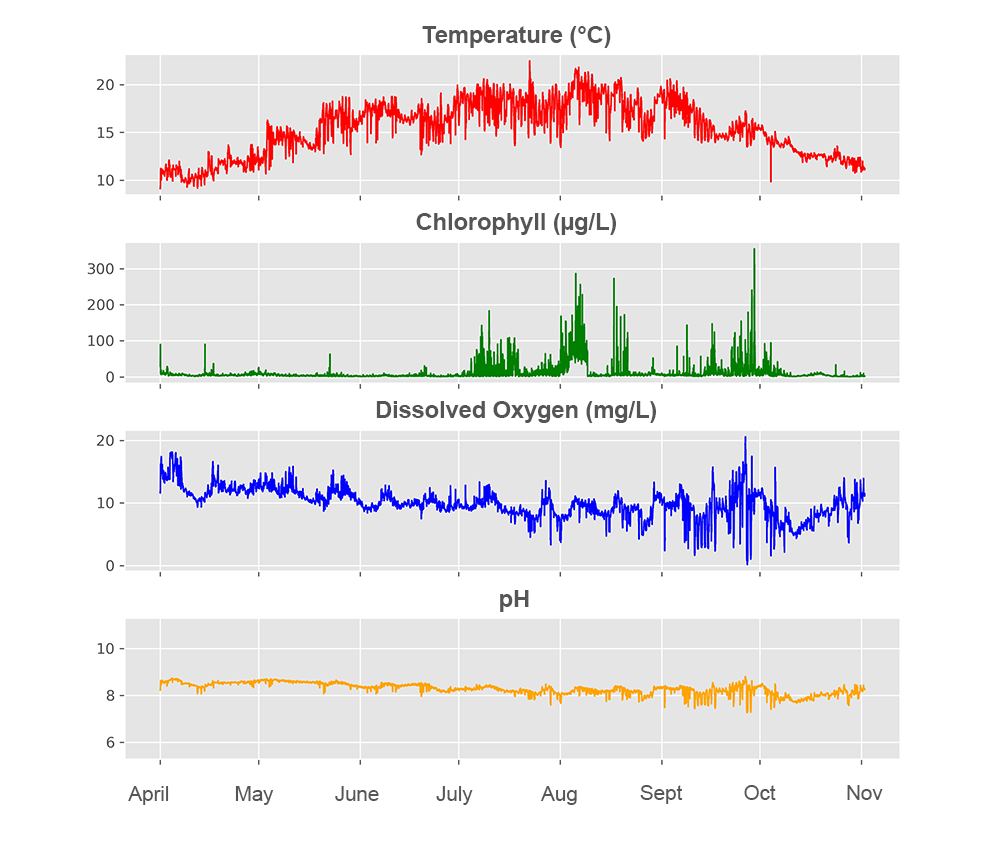
Time series of temperature, chlorophyll, dissolved oxygen, and pH in a shallow embayment

From top to bottom, the plots contain:

  • Temperature (°C)
  • Chlorophyll (µg/L)
  • Dissolved Oxygen (mg/L)
  • pH

Chlorophyll and dissolved oxygen are monitored closely at this site, as nitrate loading from a nearby harbor contributes to low dissolved oxygen conditions. Multiparameter instruments like the HydroCAT-EP help to catch these events and tie each parameter into a broader context.

Flushing and Storing pH Sensors on the HydroCAT-EP V2
Tech Tips
11.15.21
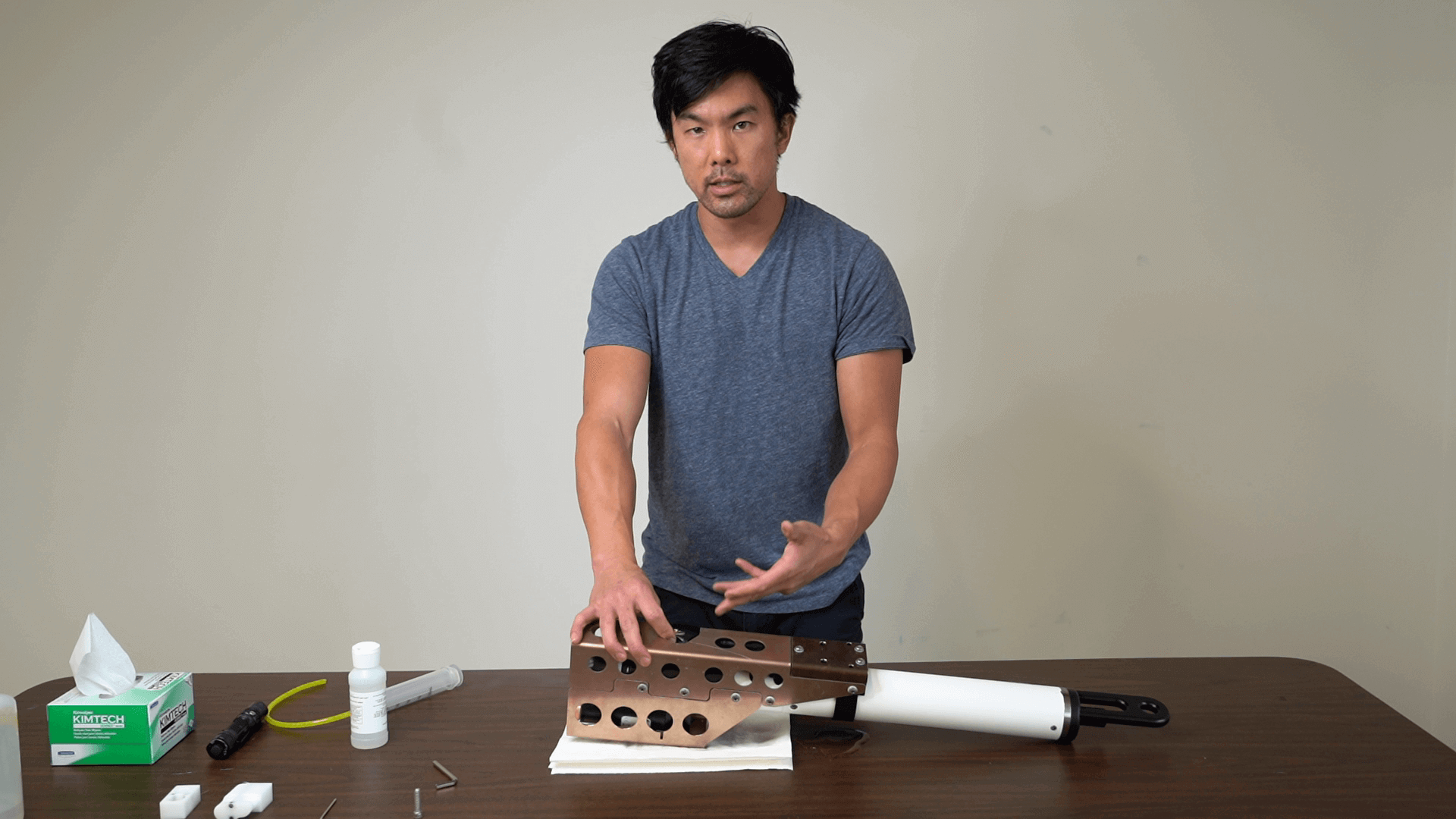
Flushing and Storing pH Sensors on the HydroCAT-EP V2
Watch Greg demonstrate how to properly flush and store your pH sensors.
Learn More
Calibrating ISFET pH Sensors
Tech Tips
10.19.21
Calibrating ISFET pH Sensors
Learn how we’ve adapted our calibration facility to account for conditions ISFET pH sensors meet in the wild to achieve long-term stability.
Learn More
Why is Calibration Important?
Tech Tips
08.26.21
Why is Calibration Important?
Precision engineering is meaningless without proper calibration. Learn why calibration is an important aspect of Sea-Bird Scientific sensors.
Learn More
Get in touch

Contact our team

Ready to take the next step? Connect with Sea-Bird Scientific’s team for personalized guidance, support, or to request a quote for our solutions.