.svg)

December 2018 Newsletter
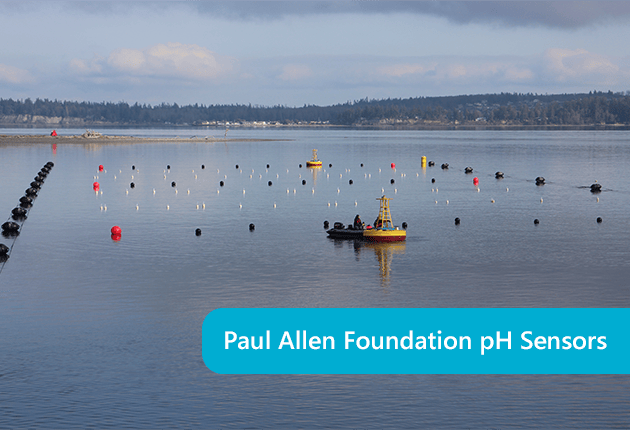
Spanning January to July 2018, two alpha SeapHOx V2s (serial numbers 001 and 002) tracked changes in pH at an experimental kelp farm funded by the Paul Allen Foundation. The purpose of the experiment was twofold: field-test the upgraded version of the SeapHOx pH sensor, and see if Saccharina latissima aquaculture can help combat ocean acidification.
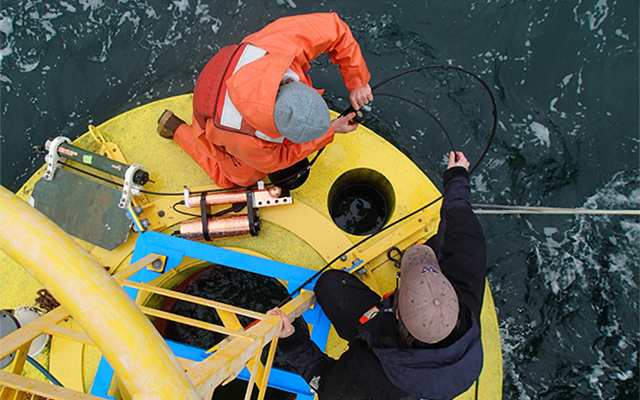
3 meters below the surface of Hood Canal, a basin in Washington State’s Puget Sound, the very first SeapHOx V2s hummed along next to an experimental sugar kelp farm. In a previous life, these SeapHOxes were among the first SeaFET V1s: when Sea-Bird Scientific made the decision to upgrade the line of pH sensors to the SeaFET V2, these early instruments were the readily available for upgrades. Engineers pulled the original boards out of these instruments, fitted them with all new hardware, and combined them with a 37-SMP-ODO to form the first alpha “SeapHOx V2”. After hours of impressive performance in controlled test baths, it was time to test serial number 001 and 002 in the field.
001 and 002 soon found themselves on separate moorings, situated on opposite ends of the experimental kelp farm. The aquaculture site itself is an experiment to identify if sugar kelp farming can help sequester carbon to combat ocean acidification, funded by the Paul Allen Foundation and lead by the Puget Sound Restoration Fund with support from a variety of research partners. As a pH sensor, the SeapHOx V2s were useful additions to the moorings devoted to studying ocean acidification, and the relatively fast sampling speed made it possible to track rapid changes in the dynamic environment. Several additional sensors joined the SeapHOxes on the mooring, including a 16plusV2 CTD, chlorophyll sensors, current meters, and another colorimetric pH sensor.
While researchers are still analyzing the data for the larger aquaculture project, the SeapHOx V2 deployment represented a successful deployment of the prototype sensors for Sea-Bird. 001 and 002 performed admirably for the seven month deployment, providing high-quality pH data with minimal errors. The success and lessons learned from this deployment persist in every SeaFET V2/SeapHOx V2 sensor made today.