.svg)

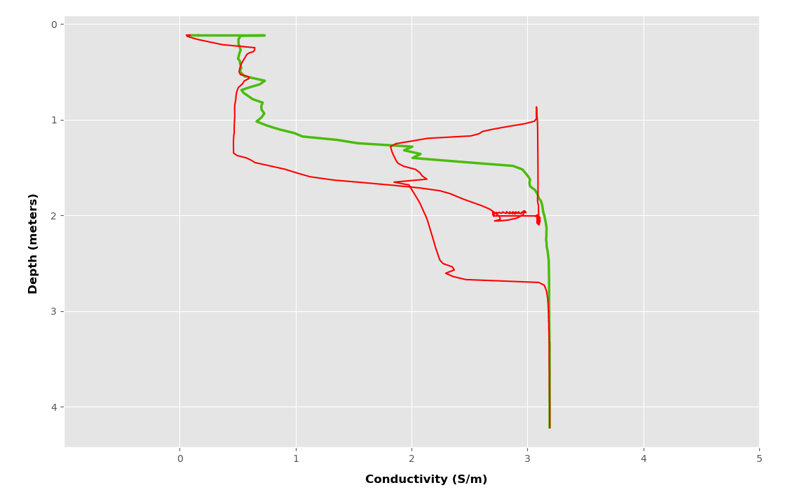
The data above show conductivity from a 19plus deployed in a shallow estuarine river. The red line shows the CTD downcast and the green line shows the upcast. While the upcast data show the expected shape for a CTD profile (low conductivity at the surface, rising conductivity as the CTD descends), the downcast shows an unusual shape in until about 2.6 meters depth, where conductivity appears to suddenly correct itself.
Can you determine the issues during the downcast?
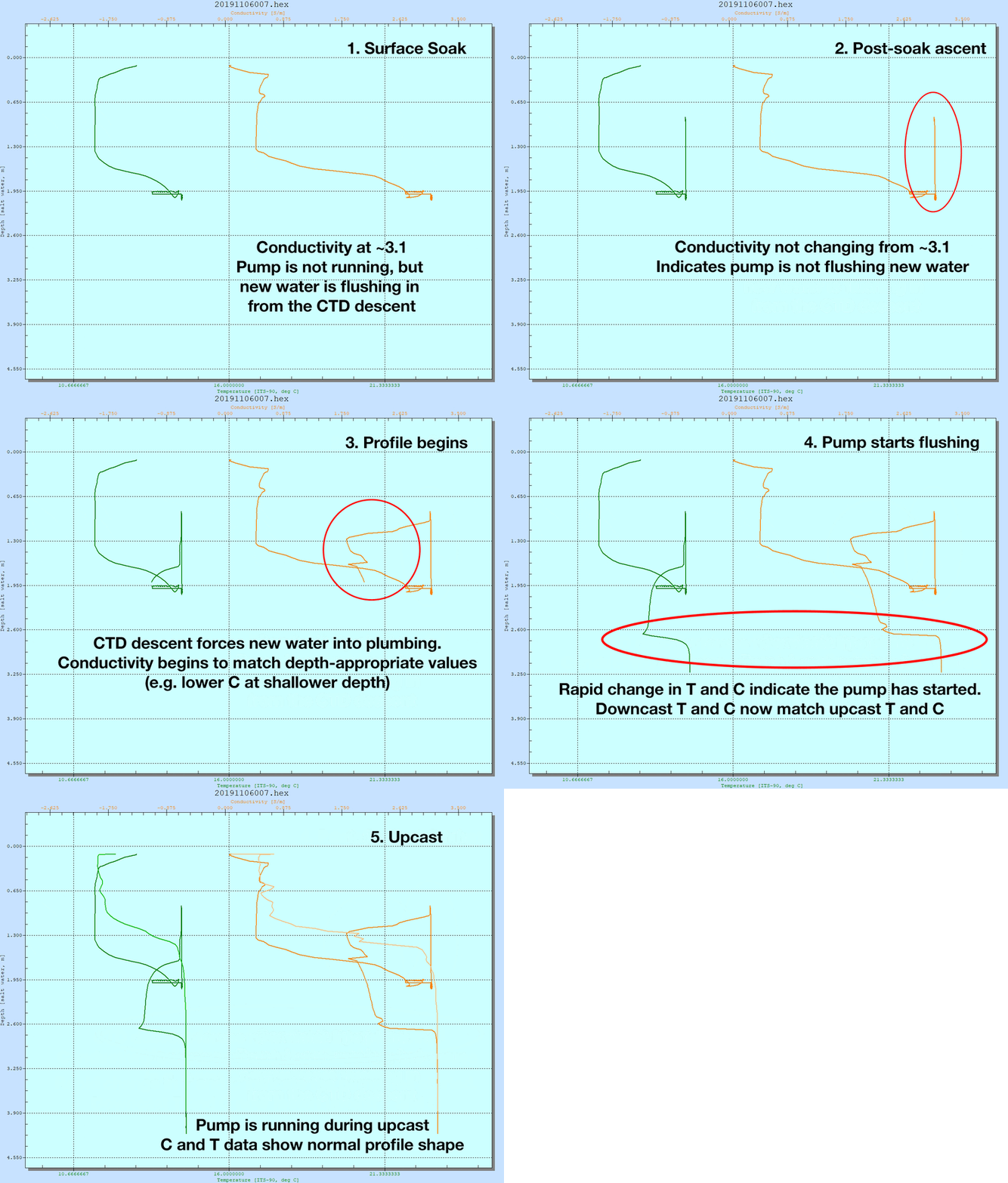
The CTD’s pump was not running. However, this is not due to any electrical or mechanical errors - the most likely cause is an air bubble caught in the pump head. The SBE 5 pumps used on profiling CTDs are not self-priming, meaning that they cannot move water if the pump’s impellor is not immersed. In rare instances, an air bubble may become caught in the pump head, causing the impellor to spin in a pocket of air without moving water through the CTD’s flow path.
When a bubble forms inside of the pump head, it will be squeezed out by higher pressures as the CTD descends. However, in shallow-water profiles, soaking the CTD in shallower depths may not provide the necessary pressure to squeeze air bubbles out of the CTD’s plumbing before the start of the profile. This is especially true when the CTD’s flow path or air bleed valve is restricted by debris or biofouling. When conducting CTD profiles in shallow water, follow a few guidelines to optimize data:
- Clean out the CTD’s plumbing, and make sure that the air-bleed valve on the CTD’s plumbing is not clogged.
- Soak the CTD for 2-3 minutes before the profile at the deepest possible depth without hitting the bottom.
- Ensure that the CTD does not exit the water when pulling it back to the surface for the beginning of the profile. Exiting the water may introduce new bubbles.
- Soak for longer. A fouled or restricted flow path may take longer to purge bubbles.