.svg)

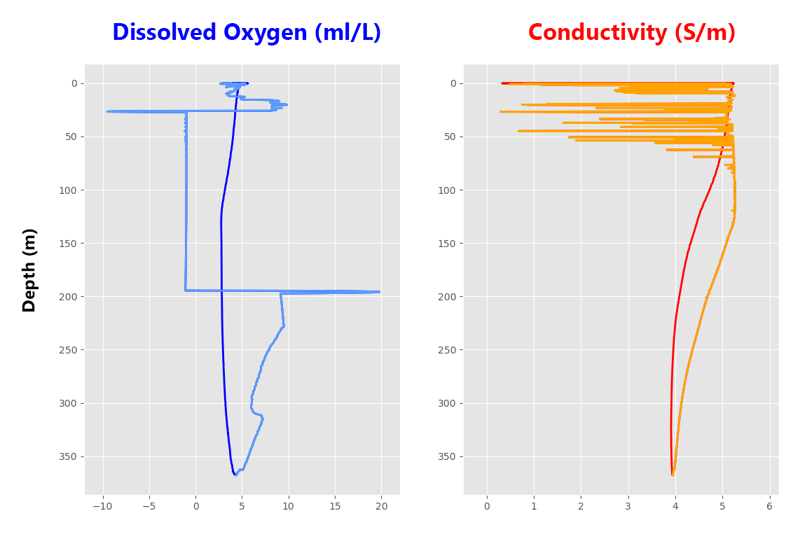
The data above show two major symptoms of the same problem occurring in different locations on a 19plusV2 profiling CTD. On the left, oxygen appears to drop below zero and is highly erratic during the downcast (light blue). However, once it hits a certain depth, the data spikes disappear, though oxygen doesn’t appear to change much during the upcast. The figure on the right shows conductivity data, with some erratic data in the first 80 meters of the cast. Like the oxygen data, conductivity doesn’t appear to change much during the upcast.
Answer: Bad connection from oxygen sensor and pump cables
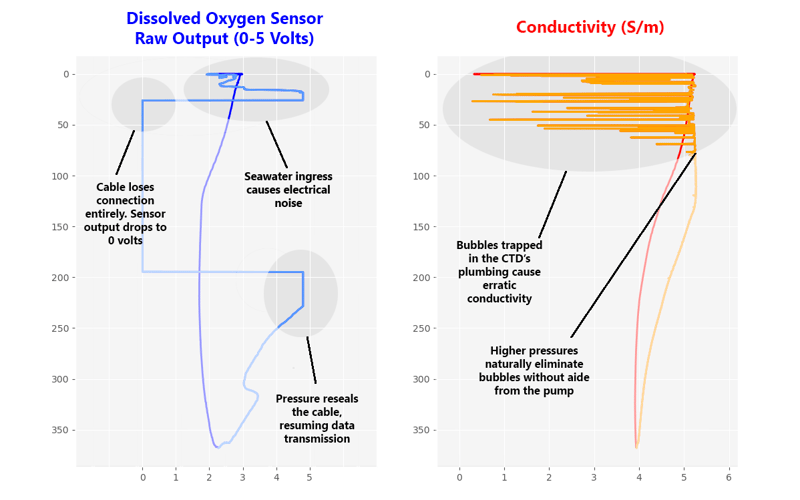
Cables and connectors link power and communication between sensors and the CTD. Damaged or neglected cables increase the risk of electrical noise from seawater ingress, and a broken cable can fail to direct power to the sensor. In this case, both appear to have happened:
1. The cable for the dissolved oxygen sensor had an intermittent connection, resulting in electrical noise and a period of disconnection from the sensor when the cable failed between 30 meters – 200 meters. At around 200 meters, the cable appears to have reconnected - this can sometimes happen where greater pressure squeezes the cable back into a sealed position - and the spikes in oxygen data disappeared.
2. The cable to the CTD's pump was dysfunctional during the entire cast, preventing power from reaching the pump. In this case, the pump did not run at all during the profile. This resulted in erratic conductivity data at the beginning of the cast from bubbles that failed to purge from the plumbing, and nonresponsive oxygen and conductivity data during the upcast.
Proper care of cables and connectors is important for data quality and instrument longevity.