.svg)

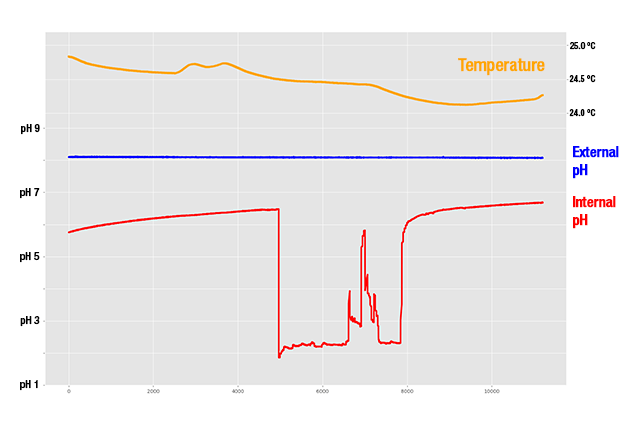
The data above originate from a SeaFET pH sensor connected to a flow-through system that should provide stable, consistent data. As you can see, the Internal pH value experiences a dramatic drop in pH and a subsequent increase in noise midway through data collection. The External pH values match samples from a spectrophotometer. Temperature remains stable during the shift in Internal pH, indicating that the flow-through system continued to provide a consistent seawater supply.
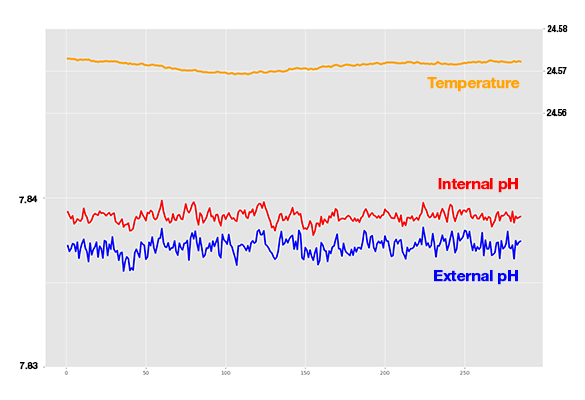
These data originated from a Shallow SeaFET with a failed DuraFET. Replacing the DuraFET and reinstalling this SeaFET on the flow-through system resulted in the highly stable and accurate data shown above.
The DuraFET—the heart of the Shallow SeaFET’s sensing abilities—consists of the pH-sensing ISFET along with the Internal Reference electrode that is bathed in KCl gel (hence the term “Internal pH”). If the DuraFET is exposed to dry air for too long, this KCl gel will crystallize. If this occurs, Internal pH data is no longer valid and the DuraFET should be replaced. In some cases (like this one), External pH data may remain stable when the Internal Reference is damaged. However, in many cases, Internal Reference damage affects the entire DuraFET, leading to invalid Internal and External pH readings.
To prevent this from happening to your SeaFET, follow two simple rules:
- Always store the SeaFET with seawater in the wet cap—freshwater will cause an offset in the calibration, and no water will cause the internal KCl to crystallize.
- Do not expose the SeaFET to freezing conditions. If the KCl in the Internal Reference freezes, it will expand and damage the DuraFET beyond use.