.svg)

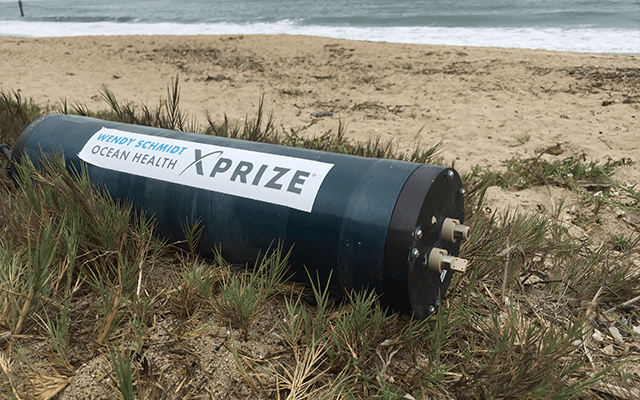 Although it’s barely the size of a breath mint, the Ag/AgCl reference allows the Deep SeapHOx V2 to dive deeper than any other pH sensor. Learn how a solid-state reference electrode allows the SeaFET V2, SeapHOx V2, and Deep SeapHOx V2 retain accuracy across a much broader range of temperature and pressure than standard pH sensors. The liquid-filled electrode used by most pH sensors is a tried and tested method of obtaining in-situ pH data. However this design has noteworthy limitations for use in the ocean: the electrochemical properties of these electrodes make them notoriously unstable in seawater, and a liquid reference generally requires a junction that is intolerant of high pressures, keeping it out of the deeper reaches of the ocean. Enter the solid-state Ag/AgCl reference electrode: originally (and still included) on the Shallow SeaFET, it has been refined for use on the 2000m capable Deep SeapHOx. Along with the ISFET pH sensor and a pressure-tolerant housing, the little Ag/AgCl puck is helping open the door for high-quality pH measurements across a broader range of temperature and pressure than ever before. Sea-Bird Scientific vetted this technology in 2015 in the Wendy Schmidt Xprize competition, and continued to refine the calibration process for accuracy across a greater depth and temperature range. Today, this technology is present on the SeaFET V2, SeapHOx V2, Deep SeapHOx V2, and Float pH sensors.
Read More
Although it’s barely the size of a breath mint, the Ag/AgCl reference allows the Deep SeapHOx V2 to dive deeper than any other pH sensor. Learn how a solid-state reference electrode allows the SeaFET V2, SeapHOx V2, and Deep SeapHOx V2 retain accuracy across a much broader range of temperature and pressure than standard pH sensors. The liquid-filled electrode used by most pH sensors is a tried and tested method of obtaining in-situ pH data. However this design has noteworthy limitations for use in the ocean: the electrochemical properties of these electrodes make them notoriously unstable in seawater, and a liquid reference generally requires a junction that is intolerant of high pressures, keeping it out of the deeper reaches of the ocean. Enter the solid-state Ag/AgCl reference electrode: originally (and still included) on the Shallow SeaFET, it has been refined for use on the 2000m capable Deep SeapHOx. Along with the ISFET pH sensor and a pressure-tolerant housing, the little Ag/AgCl puck is helping open the door for high-quality pH measurements across a broader range of temperature and pressure than ever before. Sea-Bird Scientific vetted this technology in 2015 in the Wendy Schmidt Xprize competition, and continued to refine the calibration process for accuracy across a greater depth and temperature range. Today, this technology is present on the SeaFET V2, SeapHOx V2, Deep SeapHOx V2, and Float pH sensors.
Read More
Although it’s barely the size of a breath mint, the Ag/AgCl reference allows the Deep SeapHOx V2 to dive deeper than any other pH sensor. Learn how a solid-state reference electrode allows the SeaFET V2, SeapHOx V2, and Deep SeapHOx V2 retain accuracy across a much broader range of temperature and pressure than standard pH sensors. The liquid-filled electrode used by most pH sensors is a tried and tested method of obtaining in-situ pH data. However this design has noteworthy limitations for use in the ocean: the electrochemical properties of these electrodes make them notoriously unstable in seawater, and a liquid reference generally requires a junction that is intolerant of high pressures, keeping it out of the deeper reaches of the ocean. Enter the solid-state Ag/AgCl reference electrode: originally (and still included) on the Shallow SeaFET, it has been refined for use on the 2000m capable Deep SeapHOx. Along with the ISFET pH sensor and a pressure-tolerant housing, the little Ag/AgCl puck is helping open the door for high-quality pH measurements across a broader range of temperature and pressure than ever before. Sea-Bird Scientific vetted this technology in 2015 in the Wendy Schmidt Xprize competition, and continued to refine the calibration process for accuracy across a greater depth and temperature range. Today, this technology is present on the SeaFET V2, SeapHOx V2, Deep SeapHOx V2, and Float pH sensors.
Read More
Although it’s barely the size of a breath mint, the Ag/AgCl reference allows the Deep SeapHOx V2 to dive deeper than any other pH sensor. Learn how a solid-state reference electrode allows the SeaFET V2, SeapHOx V2, and Deep SeapHOx V2 retain accuracy across a much broader range of temperature and pressure than standard pH sensors. The liquid-filled electrode used by most pH sensors is a tried and tested method of obtaining in-situ pH data. However this design has noteworthy limitations for use in the ocean: the electrochemical properties of these electrodes make them notoriously unstable in seawater, and a liquid reference generally requires a junction that is intolerant of high pressures, keeping it out of the deeper reaches of the ocean. Enter the solid-state Ag/AgCl reference electrode: originally (and still included) on the Shallow SeaFET, it has been refined for use on the 2000m capable Deep SeapHOx. Along with the ISFET pH sensor and a pressure-tolerant housing, the little Ag/AgCl puck is helping open the door for high-quality pH measurements across a broader range of temperature and pressure than ever before. Sea-Bird Scientific vetted this technology in 2015 in the Wendy Schmidt Xprize competition, and continued to refine the calibration process for accuracy across a greater depth and temperature range. Today, this technology is present on the SeaFET V2, SeapHOx V2, Deep SeapHOx V2, and Float pH sensors.
Read More
Related Posts
Tech Tips

Tech Tips
Tech Tips