.svg)

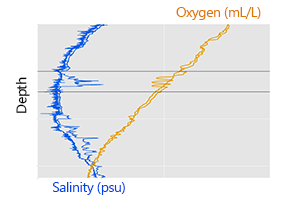 These data show a subtle problem that is producing “fuzzy” salinity and oxygen data. While the overall shape of the profile appears reasonable, small spikes are present throughout the CTD cast. The black lines encompass a particularly strange spot where both salinity and oxygen jump away from their respective averages. Is there a problem with the equipment, or are these spikes a result of the environment?
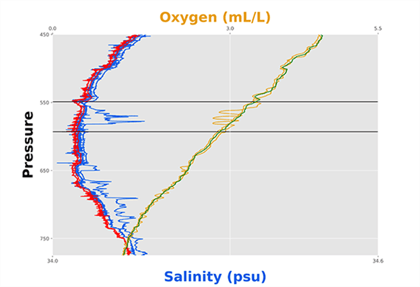 Answer: This CTD’s pump was not functioning properly, resulting in a poor response from the conductivity and oxygen sensors. This problem is most pronounced while travelling through gradients or during times of significant ship heave. These data originated from the secondary temperature/conductivity/oxygen channels on a 9plus CTD. The figure above shows data from the primary sensors superimposed over the secondary sensor data (red is primary salinity, green is primary oxygen). The primary sensors had a fully functional pump, so the data are much cleaner, with tighter grouping between samples and greater similarity in the upcast and downcast. Repairing the pump associated with the secondary Temperature/Conductivity/Oxygen plumbing on the 9plus fixed the problem, and data from the secondary sensors matched nicely with data from the primary sensors.