.svg)

Have you heard of the term, "blue carbon," before? You're probably familiar with general carbon - one of the elements that sustains life. But what is blue carbon?
Blue Carbon is the carbon that is stored or sequestered in coastal ecosystems, such as mangroves, seagrass meadows, or marshes.
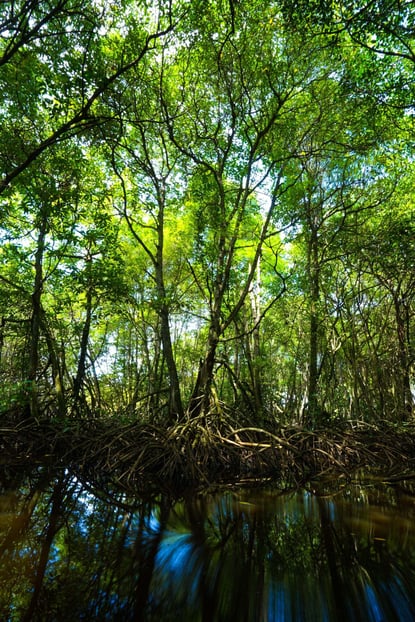 These critical coastal ecosystems are often known as carbon sinks. Mangrove forests, as an example, are considered to be one of the most effective forms of carbon storage. According to Conservation International, "Mangroves store more carbon per unit area than any other ecosystem on Earth." It is also estimated that mangrove forests specifically store more up to 10 times as much carbon as terrestrial forests.
These ecosystems collect C02 from the atmosphere and store it in their roots, locking it away. It is integral for communities around the world to come together to protect, preserve, and restore mangrove habitats and other blue carbon ecosystems to ensure the carbon they store is not released into the atmosphere. Curious where you can find the mangrove forest closest to you? NASA's Earth Observatory created a mangrove map here.
Sea-Bird Scientific is lucky to work with scientists who are looking to better understand these coastal ecosystems. We offer a suite of coastal monitoring instruments to better understand the health of these critical environments.