.svg)

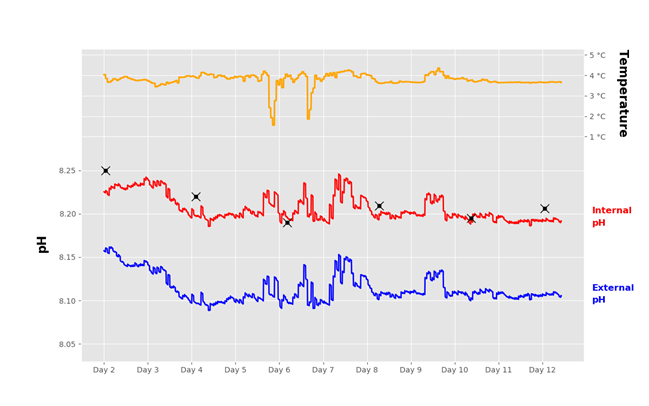
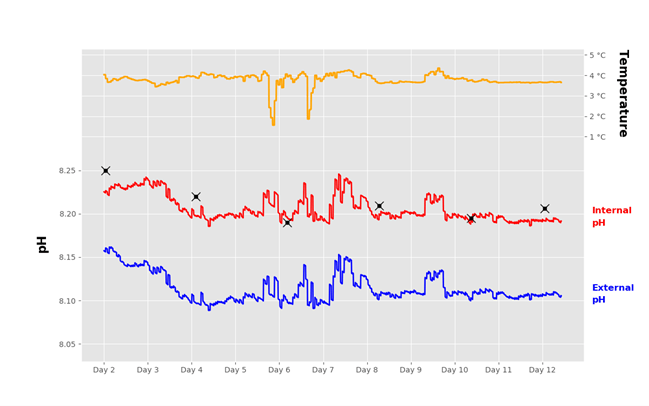 The figure above originates from a single Shallow SeaFET V2 pH sensor, which produces two pH values (Internal pH and External pH) from two separate reference sensors. The black X’s indicate pH validation samples. While environmental conditions affect each the internal/external readings differently, they should ultimately be close to one another.
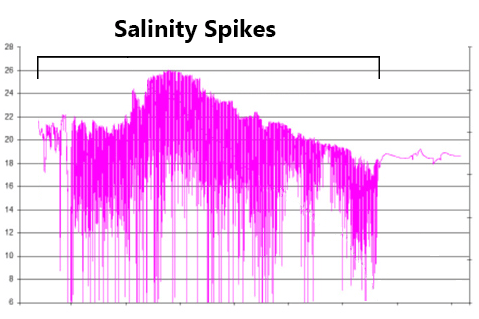
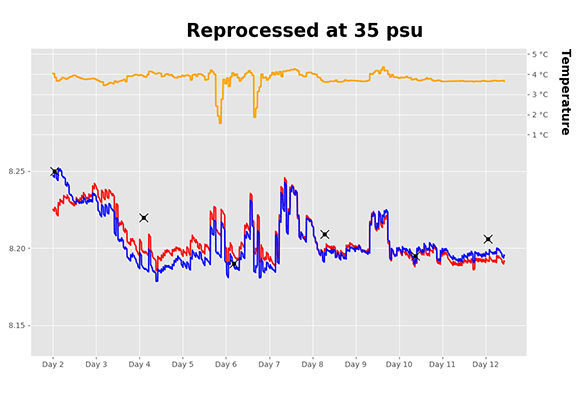 The External pH value from the SeaFET/SeapHOx V2 is dependent on salinity (while the internal pH is only dependent on temperature). Using the incorrect salinity value when calculating External pH will result in an incorrect value. The first dataset was processed at 32 psu, which turned out to be inaccurate for the deployment site. Reprocessing the data at 35 psu brings significantly improved agreement between the SeaFET’s Internal and External pH values. The SeaFET V2 assumes a static salinity when calculating External pH data, applying a single salinity value to all pH measurements. Naturally, in a changing environment, this assumption can lead to potentially large inaccuracies. When deploying a SeaFET V2 in areas with rapidly changing salinity, consider upgrading to the SeapHOx V2 pH sensor: the integrated SBE 37-SMP-ODO CTD provides dynamic salinity with every sample for the most accurate pH calculation.