.svg)

Ocean Health Assessment
Biogeochemical Monitoring
Biogeochemical monitoring studies the coupling of physics, chemistry, and biology that governs ecosystem productivity and resilience. It measures nutrients, dissolved oxygen, pH, and optical indicators such as chlorophyll fluorescence, turbidity, and backscattering to diagnose primary production, respiration, and community shifts. With event-scale sensitivity and multi-parameter context, these observations reveal bloom dynamics, hypoxia formation, and carbon cycling, and provide ground truth for predictive models.
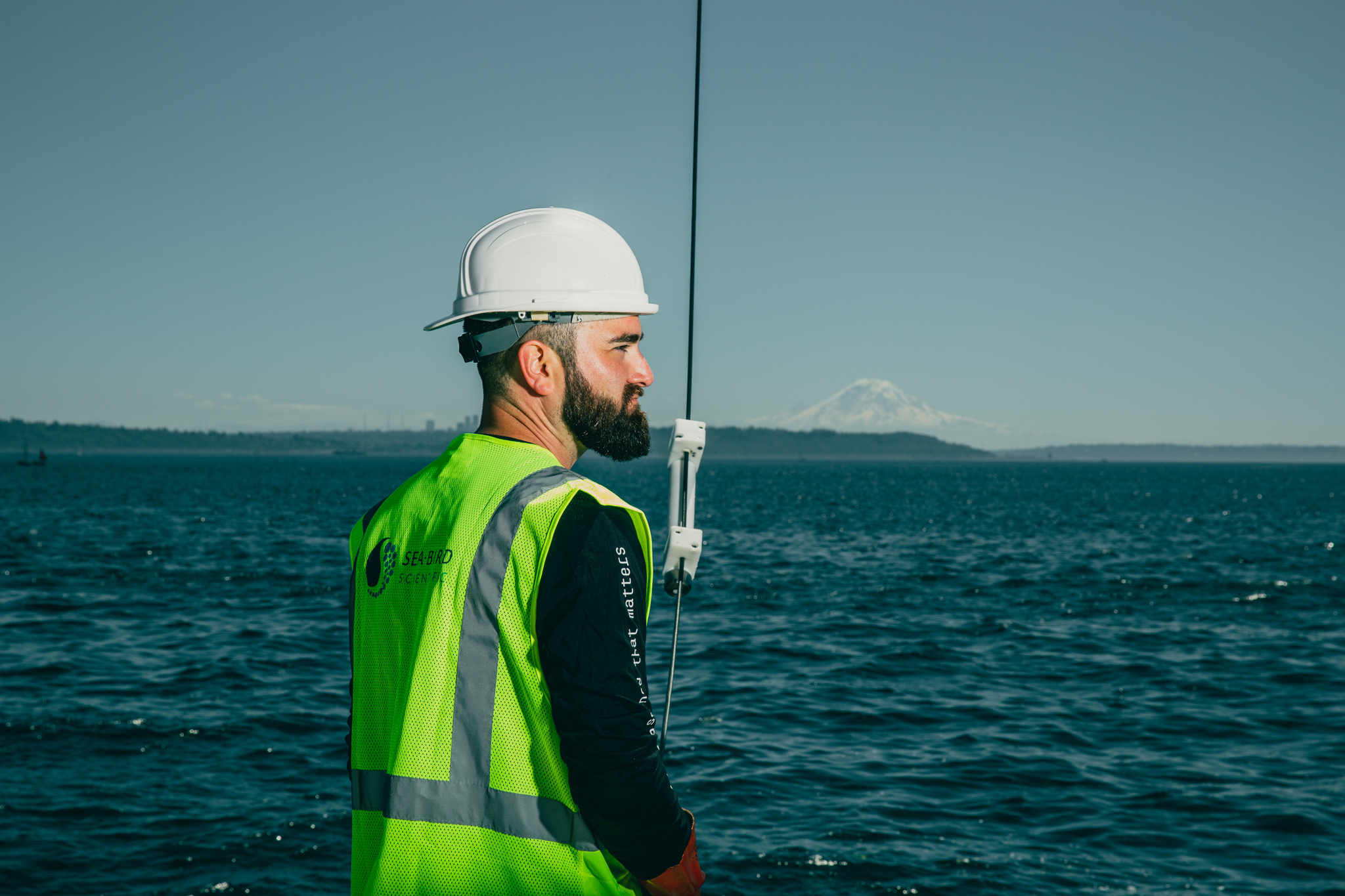
Precision in Every Reading
Sea-Bird Scientific instruments deliver trusted biogeochemical data
Sea-Bird Scientific sensors measure pH, oxygen, nutrients, and chlorophyll with unmatched accuracy. Integrated with CTDs and platforms, they provide reliable data for ecosystem research.
Oxygen
Monitor dissolved oxygen to prevent stress and ensure optimal growth in aquaculture.
View oxygen solutions
Nitrate
Monitor nitrate to prevent harmful buildup and maintain water quality for fish.
View nitrate solutions
Temperature
Control temperature for ideal fish growth and prevent harmful thermal fluctuations.
View temperature solutions
Salinity
Monitor dissolved oxygen to prevent stress and ensure optimal growth in aquaculture.
View salinity solutions
pH
Track pH levels to maintain water chemistry and protect fish health and productivity.
View pH solutions
Depth
Depth monitoring helps optimize cage placement and assess environmental conditions.
View depth solutions
Backscattering
Measures particle concentration, signaling organic matter and sediment dynamics.
View backscattering solutions
Monitoring challenges
Tracking Interactions Across Physics, Chemistry, and Biology
Biogeochemical cycles involve complex interactions among nutrients, gases, and biological processes. Measuring nitrate, oxygen, pH, and chlorophyll accurately is critical for understanding ecosystem health and climate feedbacks. Sea-Bird Scientific’s advanced sensors deliver comprehensive, high-resolution data, enabling researchers to track changes and predict environmental responses with confidence.