.svg)

SUNA V2
The SUNA V2 is the ultimate solution for real-time nutrient monitoring. This sensor measures nitrate with industry leading accuracy and stability over a wide range of environmental conditions (including extremely turbid and high CDOM conditions), from blue-ocean nitraclines to storm runoff in rivers and streams. The SUNA V2 incorporates the proven MBARI-ISUS nitrate measurement technology, which is based on the absorption characteristics of nitrate in the UV light spectrum.
Added to quote
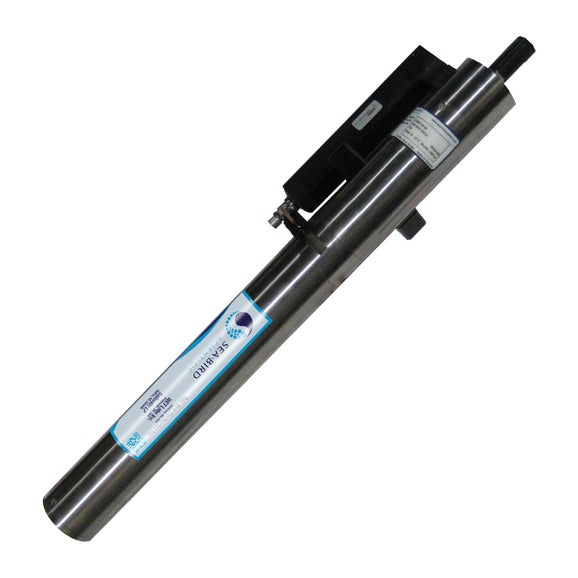
SUNA V2: High‑Accuracy Nitrate Monitoring
The SUNA V2 delivers real‑time nitrate data with industry‑leading accuracy and stability across diverse environments. Its UV absorption technology, adaptive sampling, anti‑fouling options, and robust titanium housing make it a trusted tool for long‑term nutrient monitoring.
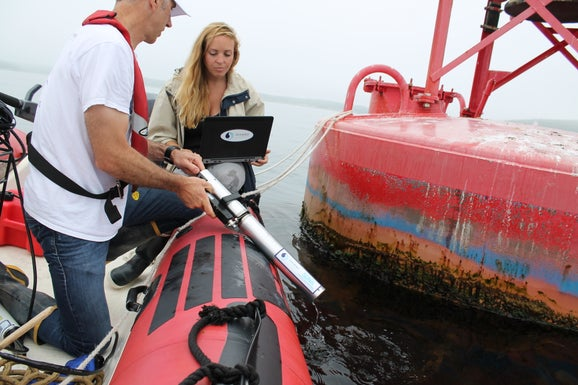
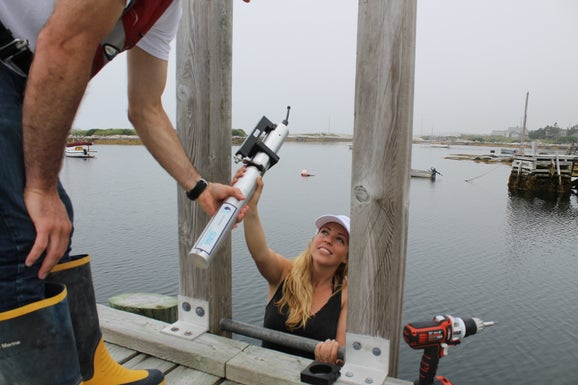
Key Features
- Accuracy and stability over a wide range of environmental conditions*
- Adaptive sampling intelligence
- Universal real-time nitrate processing algorithm
- Serial data output and a 500 meter depth rating
- Titanium housing
- User-friendly UCI software (Windows and Mac OS X compatible)
- Real-time temperature-salinity correction available (0-35°C, 0-40 PSU); requires external T/S data.
Parameters Measured
Specifications
| Specification | Value |
|---|---|
| Communication Options | RS-232 , analog , SDI-12 , USB |
| Depth Rating (Meters) | 500m, 100m |
| Power Source | External |
| Housing Material Options | Titanium |
| Onboard Memory | Yes |
| Connector | MCBH-8-MP |
| Adaptive Sampling | Yes |
| Sampling Rate | 1 Hz (1 sample/sec) |
| Memory Capacity (Samples) | 2 GB |
| Power Consumption | 8-18 VDC, 1.5 A max / 625 mA nominal |
| Accuracy | Dependent on path length and concentration range |
| Software | UCI |
| Biofouling Protection | Optional |
Content
See how our experts at Sea-Bird Scientific execute field procedures and deploy our products.

Accessories
Curious what accessories and spares you can purchase for the SUNA V2? Get in touch with our experts for more information.
Contact us
FAQs
I powered off my SUNA V2 and applied external power again. Now, my SUNA V2 won't boot up. What is the cause and how can I resolve this?
I powered off my SUNA V2 and applied external power again. Now, my SUNA V2 won't boot up. What is the cause and how can I resolve this?
The SUNA V2 has capacitors that maintain internal power for to the electronics long enough for a proper shutdown process when external power is removed. However, these capacitors must completely discharge between power cycles, or else the SUNA may fail to properly boot up when external power is reapplied. If your SUNA is stuck in a state where it will not respond to external power, unplug the bulkhead connector completely from the SUNA and wait 30-60 seconds before reapplying external power again.
My Deep SUNA V2 has the optional APF relay feature. What voltage level is recommended to activate the relay? When should I apply power to the relay, and for how long?
My Deep SUNA V2 has the optional APF relay feature. What voltage level is recommended to activate the relay? When should I apply power to the relay, and for how long?
The nominal control voltage for the relay is 12 VDC. However, between 5 - 30 VDC will work, applied to pin 4 relative to the ground pin 2 on the Deep SUNA V2. The voltage can be applied to the relay any time after external power is applied to the instrument for a recommended 100 milliseconds. Unless the relay is already switched on, there should be a very quiet (but audible) click when the relay connects power to the SUNA V2 electronics, and the instrument should enter its boot up cycle.
The purpose of the relay is to keep external power applied to the SUNA with very low quiescent current draw, so the typical use case involves the SUNA constantly powered. If the application includes the ability to switch power to the SUNA effectively then the relay feature isn't necessary. Regardless of how power cycling to the SUNA is controlled, there should be a power-off period of at least 30 seconds between power-on cycles to ensure that the capacitors that prevent a hard shutdown are allowed to completely discharge and allow the SUNA to boot up properly during the next power-on cycle.
The purpose of the relay is to keep external power applied to the SUNA with very low quiescent current draw, so the typical use case involves the SUNA constantly powered. If the application includes the ability to switch power to the SUNA effectively then the relay feature isn't necessary. Regardless of how power cycling to the SUNA is controlled, there should be a power-off period of at least 30 seconds between power-on cycles to ensure that the capacitors that prevent a hard shutdown are allowed to completely discharge and allow the SUNA to boot up properly during the next power-on cycle.
My SUNA V2 fails the self-test function when it tries to report the internal voltage measurements.
My SUNA V2 fails the self-test function when it tries to report the internal voltage measurements.
Although most functions of the SUNA V2 can be accomplished though the USB connection, parts of the self-test require that external power be applied. In this case, connect external power and repeat the test. If the problem persists, please contact Customer Support.
When running my SUNA V2 on the bench, the data shows that the lamp is turning on and off. Why is this happening?
When running my SUNA V2 on the bench, the data shows that the lamp is turning on and off. Why is this happening?
This is a safety feature of the instrument, whereby the lamp is turned off when its temperature reaches 35 °C (95 °F) to prevent damage from overheating. The SUNA continues to output dark frames while monitoring the temperature, and will restart the lamp once it has dropped back below 35 °C. If extended in-lab use is required, immersing the SUNA in a cool bath can prevent this behavior.
Why is my SUNA V2 reading high humidity? What effects does that have on the data?
Why is my SUNA V2 reading high humidity? What effects does that have on the data?
High humidity is often signs of a leak- the SUNA V2 is sealed at the factory and is not meant to be opened outside of service, and an internal desiccant should prevent any moisture left over after assembly from affecting the electronics. In the case that your self test generated by UCI reports back a humidity higher than 30%, or a steady upwards trend over the course of your deployment.
As to the effects of high humidity, it is likely to cause:
- condensation to form on the inner surface of the optics window, under certain ambient conditions. This dramatically impacts the optics and will prevent you from collecting reasonable data.
- corrosion on internal connections and electronics boards, stressing the lamp function and spectrometer. Intense corrosion will lead to equipment failure.
It is difficult to know the time-frame under which the humidity conditions will affect the instrument, so, we recommend getting the SUNA serviced as soon as the humidity reaches about 30%. If you notice any concerning trends, reach out to the support team for recommendations.
As to the effects of high humidity, it is likely to cause:
- condensation to form on the inner surface of the optics window, under certain ambient conditions. This dramatically impacts the optics and will prevent you from collecting reasonable data.
- corrosion on internal connections and electronics boards, stressing the lamp function and spectrometer. Intense corrosion will lead to equipment failure.
It is difficult to know the time-frame under which the humidity conditions will affect the instrument, so, we recommend getting the SUNA serviced as soon as the humidity reaches about 30%. If you notice any concerning trends, reach out to the support team for recommendations.
How do I use Continuous Mode on my SUNA V2?
How do I use Continuous Mode on my SUNA V2?
The continuous mode setting allows the user to program their SUNA to run continuously for an indefinite amount of time. When power is supplied to the SUNA, it will start data acquisition without an end time or maximum number of frames to measure. In general, we do not recommend this mode for long periods of time because the lamp of the SUNA can burn out. As a general rule of thumb, the SUNA lamp should be replaced when it reaches 750 hours.
How does absorption from CDOM affect the SUNA V2 nitrate measurement?
How does absorption from CDOM affect the SUNA V2 nitrate measurement?
The SUNA V2 determines nitrate concentrations from the shape of the UV absorption curve. The least squares curve fitting algorithm uses calibrated extinction coefficients for nitrate and bromide (strong absorbing species in salt water) to calculate the concentration of nitrate from the UV absorption curve. The algorithm also employs a linear baseline correction that accounts for absorption that is not associated with either nitrate or bromide. The linear baseline correction successfully compensates for CDOM absorption in cases where the CDOM absorption is close to linear in the low UV. The composition of CDOM is dependent on the type of drainage area around a particular watershed and is therefore highly variable. As a result, the shape of CDOM absorption curve can vary from region to region. For this reason, the baseline correction does not always successfully compensate for CDOM absorption. In cases where the CDOM absorption curve mimics the shape of the nitrate absorption curve, a positive bias can occur.
The most common approach for correcting a positive bias caused by CDOM absorption is to correlate the continuous in situ nitrate data provided by the SUNA V2 with nitrate concentrations from discrete water quality samples measured in a laboratory. The bias may then be calculated either as an absolute offset or as a factor. In order to provide the most robust correction possible, the discrete sample size should be sufficiently large to allow for comparisons and the relationship between the in situ and discrete concentrations should be highly correlated.
The most common approach for correcting a positive bias caused by CDOM absorption is to correlate the continuous in situ nitrate data provided by the SUNA V2 with nitrate concentrations from discrete water quality samples measured in a laboratory. The bias may then be calculated either as an absolute offset or as a factor. In order to provide the most robust correction possible, the discrete sample size should be sufficiently large to allow for comparisons and the relationship between the in situ and discrete concentrations should be highly correlated.
When running my SUNA V2 on the bench, the data shows that the lamp is turning on and off. Why is this happening?
When running my SUNA V2 on the bench, the data shows that the lamp is turning on and off. Why is this happening?
This is a safety feature of the instrument, whereby the lamp is turned off when its temperature reaches 35°C (95°F) to prevent damage from overheating. The SUNA continues to output dark frames while monitoring the temperature, and will restart the lamp once it has dropped back below 35°C. If extended in-lab use is required, immersing the SUNA in a cool bath can prevent this behavior.
My SUNA V2 fails the self-test function when it tries to report the internal voltage measurements.
My SUNA V2 fails the self-test function when it tries to report the internal voltage measurements.
Although most functions of the SUNA V2 can be accomplished though the USB connection, parts of the self-test require that external power be applied. In this case, connect external power and repeat the test. If the problem persists, please contact Customer Support.
cms/faqs/suna-self-test-fail-18-en